The Smartest Way to Send Money to India from the UK
If you’re an NRI living in the UK, you’ve probably searched for:
- Send money to India from UK
- Best way to send money to India from UK
- UK to India money transfer
- Send money India UK free
- Cheapest way to send money to India from UK
- Best GBP to INR exchange rate
- Money transfer app UK to India
- Send money to NRO account from UK
- WhatsApp money transfer India
- UK to India remittance app
And if you’re sending money regularly, you’ve probably noticed that not all money transfer providers are created equal.
Some advertise low fees but offer poor exchange rates.
Others have decent rates but slow transfers.
Some require complicated onboarding and lengthy verification.
That’s where Unplex is different.
Unplex is built specifically for NRIs and allows users to send money to India through the Unplex App or directly through WhatsApp, while enjoying competitive GBP to INR exchange rates, zero transfer fees, fast transfers, and a seamless user experience.
Whether you’re funding your family, investing in India, managing an NRO account, or paying business expenses, Unplex helps you maximize the value of every pound sent home.
Why UK NRIs Send Money to India
The UK is home to one of the largest Indian diaspora communities in the world.
Every month, thousands of NRIs transfer money to India for:
Family Support
- Parents
- Spouse
- Children
- Relatives
Investments
- Mutual Funds
- Stocks
- Fixed Deposits
- SIPs
Real Estate
- Home loans
- Property purchases
- Rental management
NRO Account Funding
- Rental income management
- Indian investments
- Local spending
- Wealth management
Business Payments
- Vendor payments
- Contractor payouts
- Freelance payments
As remittance volumes continue to grow, UK NRIs are increasingly looking for the best way to send money to India while getting the best GBP to INR exchange rate.
What Is the Best Way to Send Money to India from the UK?
There are generally three ways.
1. Traditional Bank Transfers
Most UK banks allow international transfers.
However, they often come with:
- Hidden exchange rate markups
- Transfer fees
- Slower delivery timelines
- Poor transparency
Many NRIs lose more money through exchange rate spreads than through transfer fees.
2. Money Transfer Apps
Popular options include:
- Wise
- Remitly
- Xoom
- Ria
- Instarem
These apps have improved remittance significantly.
However, users still compare:
- Exchange rates
- Fees
- Speed
- User experience
before choosing a provider.
3. Unplex
Unplex combines the best of both worlds.
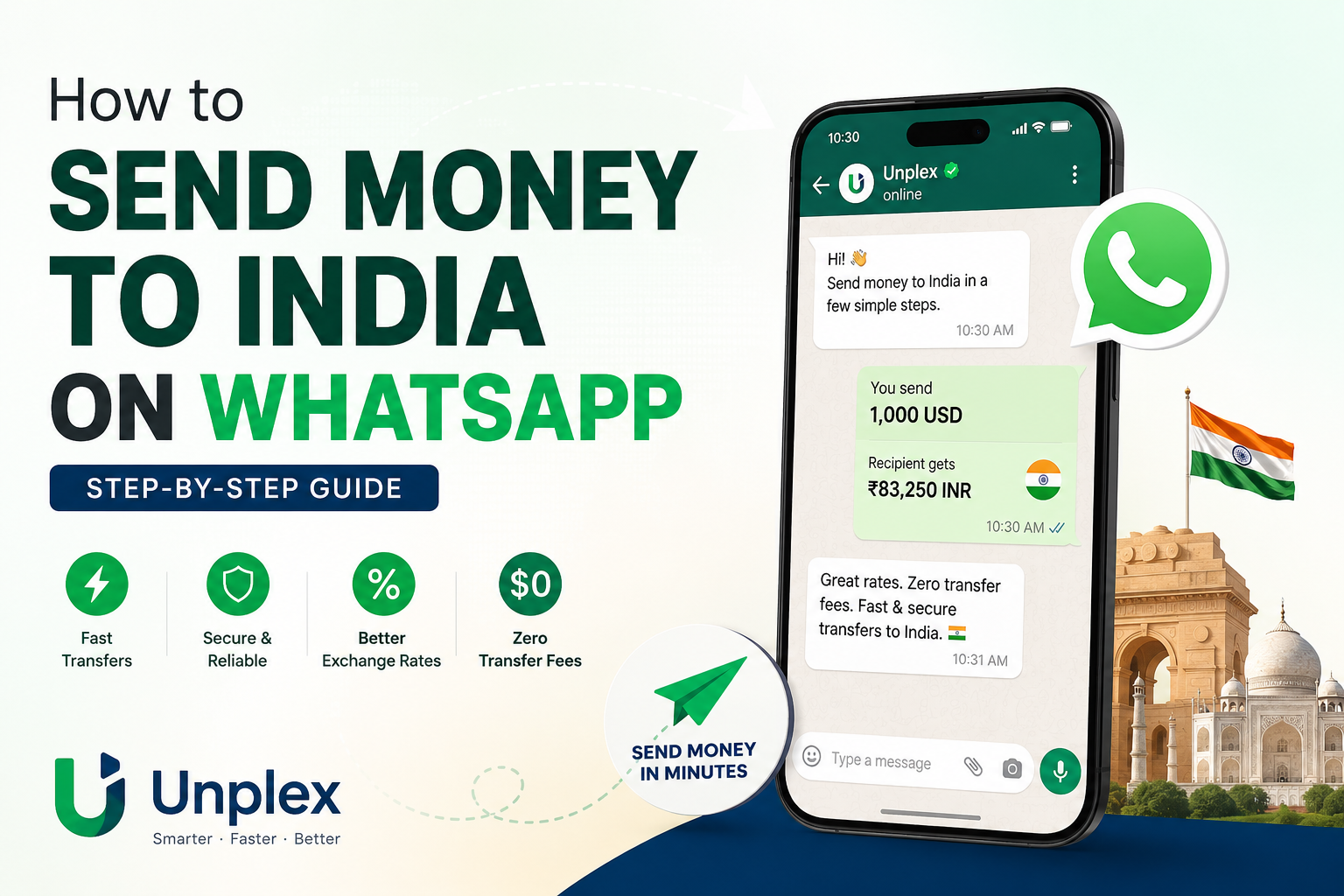
Users can transfer money through:
The Unplex App
OR
while benefiting from:
✅ Competitive GBP to INR exchange rates
✅ Zero transfer fees
✅ Fast transfers
✅ Direct NRO account transfers
✅ Easy onboarding
✅ Real-time transfer tracking
✅ Transparent pricing
This flexibility makes Unplex one of the most convenient UK to India money transfer solutions available today.
Why Exchange Rates Matter More Than Transfer Fees
Many users search:
Send money India UK free
But here’s the reality.
A provider can advertise:
“Zero fees”
while quietly making money through poor exchange rates.
For example:
Sending £10,000 to India.
Provider A:
- £0 fee
- Poor GBP to INR rate
Provider B:
- £0 fee
- Better GBP to INR rate
The difference could mean thousands of extra rupees reaching India.
That’s why smart NRIs focus on:
- GBP to INR exchange rate today
- Live GBP to INR rate
- Google exchange rate GBP INR
- Best exchange rate UK to India
And this is exactly where Unplex delivers value.
How to Send Money to India from UK Using Unplex
Step 1: Download the Unplex App or Start on WhatsApp
Choose whichever experience is more convenient.
You can:
- Transfer through the Unplex App
- Transfer directly through WhatsApp
The choice is yours.
Step 2: Complete Verification
Complete KYC and identity verification securely.
This helps ensure compliance and protects your transfers.
Step 3: Add Your Beneficiary
Enter:
- Beneficiary name
- Account number
- IFSC code
- Bank details
You can send money directly to:
- NRO accounts
- NRE accounts
- Savings accounts
- Business accounts
Step 4: Check the Live GBP to INR Rate
Unplex displays transparent exchange rates before you confirm the transfer.
This helps users make informed decisions.
Step 5: Fund Your Transfer
Transfer funds from your UK bank account.
Step 6: Money Arrives in India
The recipient receives funds directly into their Indian bank account.
Fast.
Simple.
Transparent.
Send Money to an NRO Account from the UK
One of the fastest-growing use cases among NRIs today is funding an NRO account.
Many users search:
- Send money to NRO account from UK
- Transfer money to NRO account
- NRO remittance from UK
The answer is simple.
Yes, you can send money directly to your NRO account using Unplex.
This is useful for:
- Investments
- Rental income management
- EMI payments
- Local expenses
- Wealth planning
Unplex is particularly well-positioned for NRIs who actively use NRO accounts as part of their financial planning.
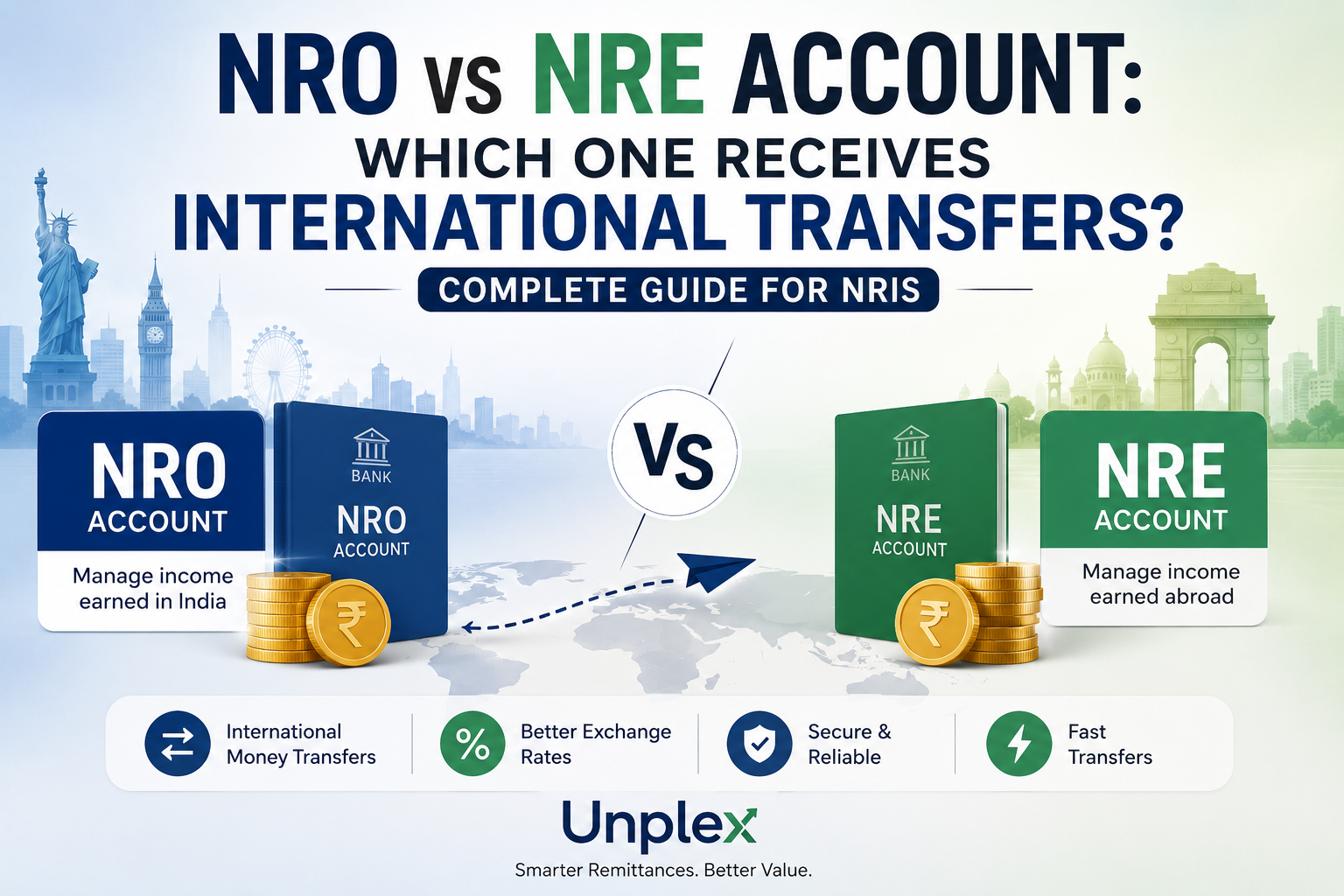
NRO vs NRE Account for UK Transfers
NRO Account
Best for:
- Rental income
- Indian earnings
- Local expenses
- Investments
NRE Account
Best for:
- Foreign earnings
- Repatriation
- Tax-efficient holdings
Many NRIs maintain both accounts depending on their financial goals.
Why More UK NRIs Are Switching to Unplex
Send Money Through the App
Some users prefer a dedicated remittance app.
The Unplex App provides:
- Beneficiary management
- Transfer tracking
- Faster repeat transfers
- Account controls
Send Money Through WhatsApp
Some users prefer simplicity.
With Unplex, you can initiate and manage transfers directly through WhatsApp.
No complicated navigation.
No unnecessary friction.
Just simple money transfers.
Competitive GBP to INR Exchange Rates
One of the biggest factors in international remittance.
More pounds converted efficiently means more rupees received.
Zero Transfer Fees
Transparent pricing.
No surprises.
Fast Transfers
Because time matters.
Built for NRIs
Unlike generic global remittance providers, Unplex is built specifically around NRI use cases.
Common Mistakes NRIs Make When Sending Money to India
Choosing Based Only on Fees
Always compare exchange rates.
Ignoring NRO Opportunities
Many NRIs overlook the benefits of funding an NRO account.
Not Comparing Providers
Even small GBP to INR differences can impact large transfers significantly.
Using Traditional Banks Without Evaluating Alternatives
Banks are often not the most efficient option.
Why Unplex Stands Out
Unplex combines:
- A modern money transfer app
- WhatsApp-powered transfers
- Competitive exchange rates
- Zero transfer fees
- Fast payouts
- NRO-friendly transfers
- NRI-focused support
Whether you’re transferring £500 or £50,000, every rupee matters.
And Unplex helps ensure more of your money reaches India.
Frequently Asked Questions
What is the best way to send money to India from the UK?
For many NRIs, using a specialized remittance platform like Unplex offers a better combination of exchange rates, fees, and speed compared to traditional banks.
Can I send money to my NRO account?
Yes. Unplex supports direct transfers to eligible NRO accounts.
Does Unplex have an app?
Yes. Users can send money through the Unplex App.
Can I send money through WhatsApp?
Yes. Unplex also allows users to initiate and manage transfers directly through WhatsApp.
Does Unplex charge transfer fees?
Unplex offers zero transfer fees while maintaining competitive exchange rates.
How do I get the best GBP to INR exchange rate?
Compare providers based on both fees and exchange rates rather than focusing on fees alone.
Final Thoughts
If you’re searching for:
- Send money to India from UK
- UK to India money transfer
- Best money transfer app UK to India
- Send money India UK free
- Send money to NRO account from UK
- WhatsApp money transfer India
- Best GBP to INR exchange rate
then choosing the right provider matters.
With the flexibility of both the Unplex App and WhatsApp, competitive exchange rates, zero transfer fees, NRO-friendly transfers, and a seamless user experience, Unplex is becoming one of the preferred ways for UK-based NRIs to send money to India.
More value.
More transparency.
More rupees reaching home.